Quantum Safe Encryption: Solving the Security Problems Traditional Encryption Can’t

Regarding encryption, a lot of people assume a file is secure as soon as it is encrypted – but sadly, this isn’t actually true. Still, encryption – being technology – does degrade with time, and the ways we presently protect information weren’t made to withstand the increasing processing strength we’ll have in the future. Because of this, quantum-resistant encryption is now part of what modern cybersecurity planning includes.

The core difficulty is the difference between how long we want to keep encrypted data, and how long the encryption we’re using will remain secure. We can’t be surprised by upcoming cyber attacks, and so, both companies and individuals are now thinking about encryption from a long-range viewpoint.

This post really investigates the security difficulties we have at the moment and shows how quantum-proof encryption, and things like QEncrypt, are solving these issues in a very sensible, practical manner.

The Hidden Frustration with Modern Encryption

The true trouble isn’t a shortage of resources; it’s putting too much trust in how long those resources will work. Quantum-resistant encryption operates on the idea that data security ought to cover the entire period the information exists, and employs a different sort of technology – things like QEncrypt – to allow groups and people to feel secure.

Data That Outlives Its Encryption

Files aren’t likely to be needed briefly. Things like significant paperwork, agreements, patents, health information, money matters and secret exchanges must be safeguarded for a long time – possibly for many years, even tens of years. Ordinary encryption doesn’t allow for this, and won’t deal with the problem of risk over a long period. Quantum-proof encryption was created to meet this demand, making sure that your files will not become impossible to read as the ability of computers improves in the future.

“Harvest Now, Decrypt Later” Is No Longer Theoretical

A worry, too, is the tactic often called “harvest now, decrypt later” doesn’t seem so unlikely as it once did. Because people are anticipating the time quantum computers arrive – ones that can decrypt things – hackers who want to break through encryption can gather and keep hold of data which is encrypted.
Threats, and quite famous ones at that, aim at data that is stored, back-ups, and archives; and it is these that companies and other groups think are securely shut away, though quantum-safe encryption solves this problem by making use of methods of encryption that will withstand both the ways of decryption which exist today and the ways which will be around in the future.

Traditional Encryption Wasn’t Built for Quantum Reality 

RSA and ECC remain useful, though they weren’t at the start built to hold up against quantum computing attacks – and quantum computers, with their far better ability, will entirely overcome them. It isn’t a question of abandoning systems that have worked, however; instead we must accept that encryption which will be good for the future needs to be created anew, to deal with dangers at the quantum scale. Accepting this is a stage in the development of encryption, not something unusual, and is at the moment how we’re shaping new, present-day encryption norms.

Security Tools Are Too Complex to Use Consistently 

A really big issue in cybersecurity, as well, is how easy – or not easy – systems are to work with. Quite a lot of secure setups don’t function because they’re just too hard to get going, to oversee, or to regularly employ. If encryption programs are too complex, individuals will either avoid them or get them wrong. Quantum-proof encryption can work, however, if it’s direct, dependable, and uncomplicated enough to be used, and a great many of the concepts around it aren’t like that.

Future-Proofing Feels Disruptive and Expensive 

Lots of organisations hesitate to adopt new encryption standards because they worry about the cost, disruption, and hassle, but replacing infrastructure, training their staff, and migrating their data feels like a monumental task that they can put off until the last minute, which they usually do.  

Newer quantum safe encryption solutions are designed to slot into place, rather than tearing down what’s already there, and by getting started early, companies can greatly reduce the costs, knock out the need for future migrations, and spread the risk out over time.   
How Quantum Safe Encryption Solves These Challenges

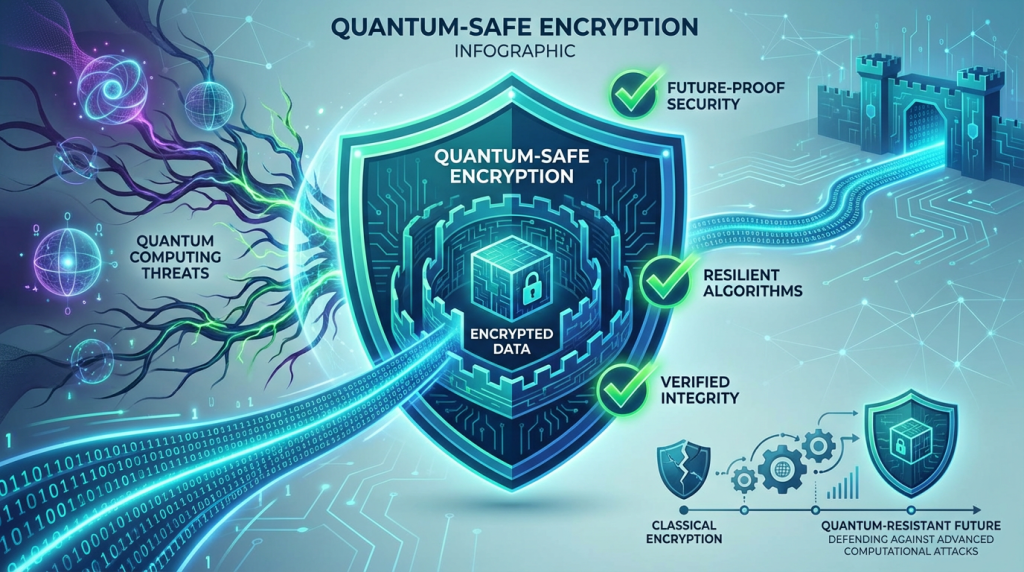
When it comes to cybersecurity, traditional encryption has three main challenges:

  1. Data will eventually become outdated
  2. It’s susceptible to future decryption methods
  3. Impractical to implement in real-world systems

But quantum safe encryption addresses all of these issues, and it provides you with:

  • Long-term protection
  • Resilient to potential decryption
  • Easy to integrate into any system

This switch from a reactive to a proactive mindset allows you to safeguard both the data you already have and the risks that will come in the future.

How QEncrypt Makes Quantum Proof Encryption Practical

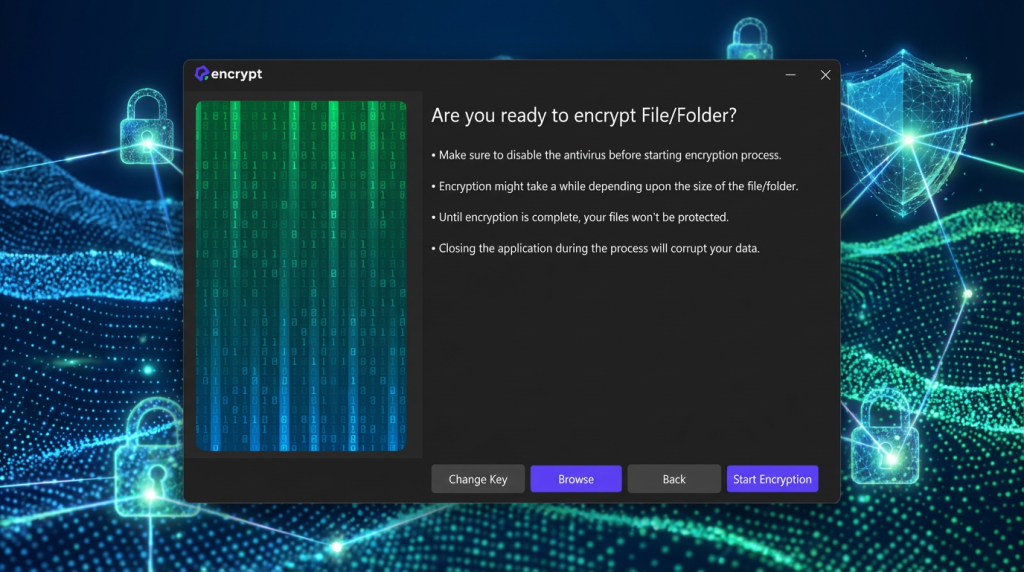
QEncrypt makes quantum-resistant encryption practical – offering a file security system people can use, and which doesn’t demand a lot of understanding of cryptography to actually encrypt and safeguard private papers. Rooted in ease, and with a view to working with what’s already there, and a pledge to be secure for years ahead, QEncrypt joins up involved encryption and routine data security.

Who Should Adopt Quantum Proof Encryption Now? 

This isn’t just for corporations and governments anymore; quantum proof encryption is becoming necessary for the following: 

  • Any business that has confidential files 
  • Professionals who store client info 
  • Companies that have to keep records for a long time  
  • Individuals who are serious about their privacy and long-term security 

Those who adopt it now will have a much smoother ride, whereas those who don’t will face costly and rushed migrations. 

Why Acting Early Matters More Than Waiting 

Those in the know – leading specialists – are warning that a poor plan is to put off altering your encryption until quantum computing is widely available; should criminals learn of the weaknesses, the expense of fixing the problems will greatly increase, and, on reflection, there isn’t a single solid reason not to use quantum-resistant encryption now.

More Value, Less Complexity: QEncrypt in the MindSuite Bundle 

Assessing long-term security for your computer, buying QEncrypt as part of the MindSuite software bundle is not only cost-effective, but also provides you with clear financial savings.  

  • Coming in at $205.95 per year when bought separately, the cost of the included products escalates to $617.85 over the course of three years.  
  • Whereas, the MindSuite bundle that comes with QEncrypt can be had for $174.99 per year and $448.99 over three years, with the same quantum-safe encryption features thrown in for the price.  

In addition to the price savings, the M

Conclusion:

When we talk about encryption, security isn’t only for protecting information as it stands – it’s about being certain that protection will continue. Quantum-safe encryption – which people also call post-quantum encryption – strengthens the usual security we have, and answers worries about how long data will stay safe, how easy it is to use in practice, and what problems may come up later. Well-known programs like QEncrypt allow us to start using security which resists quantum computers, and lets people and companies be comfortable with protecting important data, not only at this moment, but for a long time to come.

Securing the Future with Quantum-Safe Cryptography

Because protection through code is constantly getting better, post-quantum cryptography is becoming really important – it’s a necessary new area, dealing with the cybersecurity problems which will come with quantum computing. The point of this field is to design cryptographic systems which are safe when quantum computers are used against them, and so to keep data protected from quantum risks as technology goes on. We’ll go over the main ideas and latest steps forward in post-quantum cryptography, and how they are affecting what will happen in cryptography in the future.

Understanding Post-Quantum Cryptography

Post-quantum cryptography is a new area which is meant to protect our digital world from what quantum computers are able to do. Rather than the usual risks, the cybersecurity issues with quantum tech exploit weaknesses in present cryptographic systems – RSA and elliptic-curve cryptography, or ECC – for instance. The trouble with these is the problem of integer factorization: normal algorithms rely on how hard it is for regular computers to split big numbers into primes, however quantum computers can do this easily, using Shor’s algorithm. Because this algorithm cuts down the time to factorize from billions of years to seconds, it is a seriously big danger to our current cryptographic setup.

Though, in this field, symmetric encryption algorithms like AES still give fairly good protection. Even though improvements in quantum computing – specifically, the effect of Grover’s algorithm – could lessen their effective key strength by half, just making the key length twice as long deals with those issues well. Therefore, while the techniques of post-quantum cryptography seem solid when up against quantum computing cybersecurity dangers, getting ready and thinking ahead are still very important to make security better all round and to get ready for the security difficulties quantum technology creates.

The Significance of Quantum-Resistant Encryption

With quantum computing becoming more and more of a reality, it’s really important to start using post-quantum cryptography. The digital systems we have now are in danger from quantum computers which could easily crack everyday codes – things like RSA, and elliptic curves. This is a problem as quantum computers are able to do complicated calculations at rates never seen before. As a result, ‘grab now, unlock later’ schemes are a real worry; attackers could get hold of coded messages now, and hold onto them until quantum computing is good enough to read the information.

Changing to quantum-safe code systems is necessary, although it isn’t easy. Putting off this change means leaving valuable data open to coming quantum attacks. Changing the ways we encrypt things to make certain of privacy and that data is genuine, needs a lot of effort and thoughtful work to fit in with what’s already in place. The biggest issue is picking codes which give good protection against quantum dangers, and keep the speed and performance needed for what we do all the time.

Businesses need to make getting to quantum-proof code a top priority to keep their data safe. Not doing this makes them more likely to suffer attacks when quantum computing is commonly used. If we put quantum-proof code in now, we’ll make sure our digital world stays private and reliable, for the whole of the quantum future.

Quantum-Safe Algorithms: An Overview

When dealing with the security problems of quantum technology, quantum-safe cryptography is very important in keeping our digital communications safe. The main part of defending against this is quantum-resistant security algorithms – made to withstand dangers from normal and quantum computers. Of these, lattice-based cryptography is a major possibility, using the complex maths of lattice structures to give continued defence against old and quantum weaknesses, giving good security, although at times with a loss of processing pace.

Another one to note is multivariate polynomial cryptography, which uses complex polynomial sets. Because of the trouble in working out these multiple variable sets, it’s thought to be very safe against quantum unlocking attempts. But, the often big public key sizes can cause real-world performance issues.

Also, hash-based cryptography is a dependable option. This method uses well-known hash functions to make digital marks in an easy, but safe, way. The digital marks focusing on hashes are good at holding up to quantum dangers, but generally have bigger mark sizes, which can influence keeping and data-transfer.

All in all, these quantum-safe cryptography systems are a good sign of solid digital systems, set up for new dangers, though it’s vital to think through their benefits and faults for wide use.

NIST’s Role in PQC Standardization

The National Institute of Standards and Technology – NIST – is vitally important in creating standards for post-quantum cryptography. Understanding how NIST goes about its work explains why the first quantum-safe cryptographic algorithms it gave the okay to, in 2024, are so important. It all started when NIST asked for ideas; this brought in suggestions for encryption techniques which were made to hold up against the most powerful quantum computer attacks. NIST then used a very careful, step-by-step assessment procedure; this included many rounds of looking at security, testing how well things performed, and letting the public give their views. Knowledge from universities, businesses and the government together made the testing very solid, and made sure the methods were both tough and useful.

By 2024, these quantum-resistant cryptographic techniques had become a global standard, and gave a basis to defend digital systems as technology moved quickly forward. This joint effort to standardise shows that keeping world digital property safe is not about countries, and relies a lot on everyone sharing what they know. Every stage of NIST’s testing showed how important it is to have encryption methods that can change. As quantum computing gets more advanced, these standards are necessary – showing a long-term plan to keep information safe. The thorough and inclusive way NIST works makes sure the standards it chooses will stay secure and be widely used, and will keep the digital world strong.

Lattice-Based Cryptography Explained

At the very newest level of quantum-resistant cryptographic systems, lattice-based cryptography offers a strong protection from the developing cyber dangers of quantum computing. This sort of cryptography relies on complex mathematical structures – lattices – and gives truly reliable security that will hold up against quantum attacks. At its heart, lattice-based cryptography is created using difficult mathematical problems, including the Learning With Errors process and the Short Integer Solution problem. These conundrums are a big problem for normal computers, and are thought to be impossible to solve even when quantum technology gets better.

The LWE cryptographic process works by putting small mistakes into a set of linear equations; this makes a situation that is simple to make, but very difficult to work backwards from. Instead, SIS involves discovering short integer vectors in a lattice – a task well known for being too difficult to do in practice. The level of security coming from these issues makes lattice-based cryptography a leading option for quantum-proof data security.

It is already being put to practical use in securing electronic signatures and setting up public-key coding. The way it combines solid theory and actually working well makes it good for the digital worlds we have now, and will have in the future. As industries start to switch to using quantum cryptography, lattice-based cryptographic security is set to become a main part of keeping data private for a long time to come.

Implementing Quantum-Safe Key Exchange

Because digital risks are always getting more advanced – particularly with quantum computers appearing – it’s vital to set up cryptographic key exchange systems which are safe from quantum attack. Traditional methods of cryptography, such as RSA and ECC, are very reliant on the difficulties of factorisation and discrete logarithms, and therefore are likely to be vulnerable to cyber-attacks using quantum computing. Quantum-safe cryptography helps with this, giving good possibilities like cryptography based on lattices. These methods use complex mathematical structures, lattices, to guard against quantum cyber risks, by taking advantage of the difficulty of problems like the Learning With Errors (LWE) method.

Lattice-based cryptographic security is a really good tactic, as it is very strong. Unlike older cryptographic systems, lattice designs keep their security even with the security risks from quantum technologies, as challenges like the Short Integer Vector problem are still hard to solve – even for quantum computers. But putting these post-quantum cryptographic algorithms into practice has issues. It is still a large problem to get solutions that work well and can be expanded across large networks. And the technical difficulties in fitting these protocols into what’s already in place make things more complicated.

There’s a lot of possibility these methods will be used, as many industries understand the need for cryptography which will still work in the future. To get wide-ranging, quantum-proof encryption, coming developments must stress improving performance and making things work together without trouble.

Conclusion:

As quantum computing introduces fresh problems in data protection, advances in post-quantum cryptography offer hopeful answers. The transition to quantum-proof encryption methods – founded on solid maths, and steered by the demanding, quantum-proof cryptographic benchmarks of NIST – is going ahead. Getting these quantum-tough security systems in place now will make sure we have good protection against the approaching quantum cybersecurity dangers, and so will truly secure our digital world.

Navigating the Quantum Future of Cybersecurity

Because the digital world is always changing, it’s really important to safeguard data that shouldn’t be seen by others. New quantum cryptography methods are, in a really big way, changing how we make communications safe. This piece goes into what you need to know about quantum key distribution, cryptography after the quantum age begins, encryption that’s safe when quantum computers are around, and the leading firms making these steps forward – a full study of these newest technologies created to make our digital base more robust against quantum cyberattacks.

Understanding Quantum Key Distribution

Understanding Quantum Key Distribution – QKD – shows us a new sort of secure communication, one using the unique rules of quantum mechanics. QKD, at its heart, uses quantum entanglement with the quantum no-cloning theorem to give a dependable means of exchanging cryptographic keys. Quantum entanglement makes sure two particles stay connected, so the status of one immediately affects the other, no matter how far apart they are. This connection is what makes absolutely secure protection possible.

The quantum no-cloning theorem says that it isn’t possible to make a perfect copy of a quantum state that you don’t know, meaning people trying to listen in can’t copy the key without causing a change which can be noticed. Combined with the measurement-disturbance principle – which states that looking at a quantum system will always change it – QKD makes any attempt to intercept it, and get at it without permission, clear and essentially impossible.

Given the current digital world, with the increasing number of cyber dangers, QKD is a good deal better than old-style cryptographic methods. The older methods rely on difficult maths problems which quantum computers will perhaps be able to solve one day, but QKD’s safety is based on firm laws of physics. With quantum computers coming along to put today’s encryption in danger, how vital QKD is to protecting private communication gets bigger and bigger.

The Advancement of Quantum-Safe Encryption

The development of quantum computing offers big benefits, but also seriously interferes with how we normally ensure security. Current encryption methods – RSA and ECC, for instance – rely on tricky mathematical problems to be safe; however, quantum computers can resolve these problems much, much faster. Because of this, post-quantum cryptography systems are being made, specifically designed to resist what quantum computers are able to do.

The main danger in the encryption we use now is that it relies on either being able to factor very large numbers, or dealing with discrete logarithms – issues that Shor’s algorithm, and other quantum methods, can deal with easily. To get around this, scientists have created algorithms which are quantum-resistant, using lattice, hash and multivariate polynomial techniques, all of which will hold up against quantum attacks.

Putting post-quantum cryptography into practice takes several forms. In a lot of areas of business, the first step is to look at what their present encryption needs are, and the effect of the quantum computing security risk. Switching to encryption that is quantum-safe often involves using hybrid cryptography – a mix of old and quantum-safe algorithms – so the changeover isn’t abrupt and current security isn’t lost. Alongside this, training is key to get industries – from banking to medicine – ready for the change. This does not simply guard future messaging, but helps to improve cryptography as a whole.

Pioneering Companies in Quantum Cryptography

At the very newest part of quantum encryption, quite a few companies are making new, better quantum encryption ways of doing things – things that make digital security stronger in a lot of different areas. ID Quantique is well known as being ahead of the others, and is particularly famous for its special systems for swapping quantum cryptographic keys. These encryption answers which are safe from quantum attacks are used in business, the government, and so on; they make sure data is safe from the dangers of quantum computers. Their technology lets encryption keys be swapped using quantum particles, so making the communication almost totally unable to be intercepted.

At the same time, MagiQ Technologies is getting on with its range of products which are designed to protect data being sent by using complex quantum-safe encryption methods. By putting together quantum key distribution and normal encryption, MagiQ makes network security better for businesses and defence, mixing the most modern technology with what works in the real world to keep important data secure.

Toshiba, a surprising big actor in this area, uses its knowledge of quantum physics to make quantum key distribution systems which make sure communications are secure over long distances. The new things Toshiba has done strengthen not just quantum cybersecurity for companies, but also keep safe vital structures and health data.

These top achievements show the change from what was thought about in theory to actually using quantum encryption; they show that people are taking the first step to protect against the danger of quantum computing. The things each company has done show how much better encryption is becoming, and show the changes which are always happening in the areas of digital security.

Post-Quantum Cryptographic Algorithms

Within quantum encryption, the development of post-quantum cryptographic algorithms is a very important advancement. Of these, lattice-based cryptography is notably good, giving substantial defence against the quantum computing cyber-security risks which are developing. The security of these algorithms comes from using complex mathematical systems – lattices – which can resist even quantum computers which have huge amounts of calculating capability. As quantum computing gets better, these algorithms become more and more essential; they are the basis for new security systems which can withstand quantum attacks and are extremely important for keeping safe confidential information in a tech future which is not certain.

The National Institute of Standards and Technology – NIST – is leading the way in this, and is standardising these algorithms for use everywhere. Their strict tests are to choose algorithms which are both safe and work well, to take the place of current cryptography. This work requires a lot of cooperation in the business, and asks for help from university academics and company specialists to make better and put into practice these complicated cryptographic algorithms. Working together like this not only makes cyber-security better, but also allows a simple change to a safe, digital quantum time.

Quantum-Resistant Algorithms and Their Implementation

The growing number of companies specialising in quantum encryption represents a really important step forward in cybersecurity; it provides a solid defence against the new dangers coming from quantum computing. These companies focus on developing post-quantum cryptographic algorithms – algorithms which will be able to stand up to the enormous processing power of the quantum computers which are on their way. Hash-based cryptography, for instance, utilises simple functions which work in one direction, so it is resistant to quantum brute force attacks, and is therefore a dependable way to secure digital signatures. Conversely, code-based cryptography relies on how hard it is to decode random linear codes, and therefore gives strong protection against quantum attackers. Also, multivariate polynomial cryptography – which is based on solving equations made up of several polynomials – has a level of difficulty which still makes it hard for quantum computers to break through effectively.

By using several of these methods, quantum encryption companies are trying to protect future communications from the quantum computing threats we anticipate. This work is vital, because it doesn’t just improve the security of the digital systems we already have, but also creates the basis for communication technologies which will keep data safe and sound in the coming age of cryptography. As quantum computers are used more and more, the leading work of these businesses in improving quantum-resistant cryptographic security will be crucial in keeping digital systems secure.

Future of Quantum Cybersecurity Solutions

Because quantum computers are slowly becoming more common, the cybersecurity world is about to greatly change. The increasing number of companies that do quantum encryption is really important in protecting digital things – like data – from the cyber-threats quantum computing will probably make worse. These companies are leading the way in making strong, post-quantum cryptographic techniques to keep important information safe.

With an eye toward being able to fit in, these quantum security businesses deal with possible problems having to do with working with and putting their technologies into the networks we already have. What they do is mostly using quantum-based ways to protect data to make encryption stronger, so that cybersecurity systems will stay strong. It’s a main goal to be able to get their systems working within what is already in place, while also getting ready for a future run by quantum tech.

These groups are always improving; they build places where constant getting-better is encouraged in order to deal with cyber-threats that keep changing. Being up to date on new, quantum-safe encryption rules is the most important thing, as they regularly make algorithms and rules better to be sure to protect customer data from the growing power of quantum computers.

Really, companies in quantum cybersecurity are starting a new part of digital defence, and are dedicated to creating complex, quantum-proof security answers that can deal with the difficult needs of quantum technological growth. Their part is more and more important in a time of a constantly bigger digital world.

Conclusion:

Digital security strategies are being transformed by quantum encryption, setting the stage for cutting-edge protection against new and evolving threats. With quantum-safe encryption solutions and visionary companies leading the charge, these innovations are poised to revolutionize the landscape of cybersecurity. As the field of quantum computing advances, embracing quantum encryption proactively guarantees resilient safeguards that protect sensitive data, ensuring a safer digital era ahead.

Unlocking the Future of Cybersecurity: Quantum Key Tools and Strategies

Regarding the rapidly evolving field of quantum computing, traditional cryptographic systems are facing the very real challenge of potential quantum-based hacking. This article will take a closer look at the growing field of quantum key distribution, post-quantum encryption and post-quantum cryptography, as well as leading players, post-quantum encryption firms and the emerging post-quantum cryptography landscape. All of which will be pivotal to bolstering our computer systems against the quantum hacking threat.

The Groundbreaking World of Quantum Key Distribution

Quantum key distribution (QKD) is being spearheaded by a handful of pioneering companies that are implementing QKD to protect against the threats that are looming with the rise of quantum computing, when revolutionizing secure communications. At its core, these companies’ quantum encryption methods use quantum mechanics principles, such as entanglement and the no-cloning theorem, and rely on mathematical certainty to verify that only the intended recipient, using quantum mechanics, receives encrypted keys and can’t be intercepted.

Coming from Switzerland, ID Quantique’s commercial quantum cryptographic key exchange systems for the global financial and government markets, stand out as an exemplar of these innovations, while they use the BB84 protocol to create security levels that are above and beyond the standard.

On the other hand, Toshiba Quantum Key Distribution from Japan outshines its competitors, as it goes into fiber optic quantum key distribution, and space-based quantum secure communication, constantly pushing the limits of what’s achievable in long-distance secure data transmission. Its practical application in city networks gives the world proof of the value of QKD in real life. QuantumCTek’s massive quantum communication systems in China also speak of a nation’s faith in quantum technology and its capacity to construct colossal network architectures.

However, it’s crucial for these companies to iron out the problem of verifiable classical communication, for QKD to become a realistic practical use. Combining today’s top quantum innovation with traditional systems, the architects of these services will build the underpinnings of an impending quantum-proof encryption future. As the requirements for secure communications will rise with the advent of quantum computing, the importance of these companies in saving the digital world will become even more pronounced.

Embracing the Future with Quantum-Safe Encryption

There’s a pressing need to fortify our digital defenses, and that’s what post-quantum encryption is all about, when the world is racing towards the future of quantum computing. Coming fast in just as the threat of quantum computing becomes more real, this kind of encryption is basically the last line of defense against the powerful processing capabilities that future quantum machines will have, and which could otherwise render current encryption frameworks useless.

Well-known techniques in this area include lattice-based cryptography and error correction, and one of the most promising lattice-based algorithms is NTRU, which uses complex mathematical structures that completely stump quantum computers, and throw them off the scent. Meanwhile, fault-tolerant coding is something that we’re all familiar with, using redundancy to spot and correct errors, in this case to keep encrypted messages pristine.

Here in the USA, and indeed worldwide, the National Institute of Standards and Technology is laying out the blueprints for post-quantum cryptography, sorting out and selecting encryption methods that are capable of defying the power of quantum computers. And now, with international cooperation and collaborative research we’re closing in on the very high-stakes, quantum-resilient encryption techniques that are our passport to a secure digital future.

Key Players in Quantum Cryptography

Looking at the world of quantum encryption, there’s no shortage of trailblazers, and one of the companies that have been consistently at the forefront of turning abstract quantum ideas into concrete solutions is ID Quantique. Coming hurrying in with quantum-encrypted key exchange systems, ID Quantique is capitalising on the fundamental principles of quantum mechanics to make sure that their systems are impenetrable to hackers.

ID Quantique’s cutting-edge methods play a major part in shielding against the new risks that arise from the emergence of quantum computing.

In a similar vein, MagiQ Technologies is a standout leader in embedding quantum-secure communication protocols into the existing infrastructure. They’ve also shaken the foundations of the industry with their work in developing quantum communication hardware, most notably quantum entropy generators, that make those quantum defenses more powerful.

Toshiba on the other hand, have a deep-rooted commitment to push the boundaries of quantum-resistant security systems. They’ve pioneered all-encompassing solutions combining the hardware and software components. It’s basically the whole package, and stressed on the need for scalable quantum key distribution, as well as post-quantum cryptography that makes sure that data stays safe.

These companies, therefore, are setting the stage on fire with their quantum cryptography developments and ensuring that our digital lives will be secure as quantum computing becomes more prevalent.

Navigating the Terrain of Post-Quantum Cryptography

The moment quantum computers could potentially destroy traditional cryptography. The need for a secure future will be at the forefront of everyone’s mind, when the day arrives, Q-Day.

Well-known for its ability to replace legacy systems, post-quantum cryptography is basically the go-to strategy to protect against the devastating effects of quantum computers, and lattice-based cryptography is one of its strongest tools. With the use of mind-boggling multi-dimensional patterns, lattice-based systems create an almost impenetrable barrier to hackers. Even those using the most sophisticated quantum machinery won’t be able to cut through these defences.

Coming to the forefront of the problem, companies are now starting to jump on the bandwagon and integrate the latest quantum-resistant encryption techniques. Financial services, healthcare, and defence industries, where there is no room for compromise on security, are underlining the urgency to make the transition.

Early adopters will be at the top of the heap in the race to a quantum-driven future, and in order to succeed, companies will need to be adaptable, wise and ironclad in their commitment to shielding their sensitive digital assets from advancing quantum foes.

Quantum-Resistant Security Solutions in the Digital Era

Concerning countering the rise of quantum computing, one of the most pressing concerns for cybersecurity strategists is incorporating quantum-resistant systems into existing frameworks, a need that’s particularly critical in today’s digital age. In the face of rapid developments in quantum computing and in accordance with this impending breakthroughs’ accompanying risks, corporations are compelled to weigh enhancing their systems to resist quantum attacks against compromising the operational efficiency of their existing systems.

Quantum-resistant encryption requires meticulous threat evaluations and a rational approach; one way forward is to initially pinpoint the parts of an infrastructure that are most exposed and targeting these components with quantum-resistant encryption.

Companies, with the help of well-known cyber threats and quantum expertise, must form alliances with cybersecurity specialists, train their employees on what they’ve learned and dedicate monetary and human resources to their projects. These companies also should establish clear-cut blueprints, compliant with leading industry norms and compliance standards, to keep the transformation moving forward with as little disarray as possible.

Concrete examples of the efficient implementation of quantum-resistant security measures are available, as monetary bodies have successfully run pilot plans on quantum-proof communication, thereby significantly reducing their exposure to brand-new types of cyber threats. These case studies indicate that there will be problems, but a forward-thinking strategy and money invested in quantum-resilient tech can safeguard sensitive information from today’s cutting-edge threats, which will in turn result in a far more secure online landscape.

The Intersection of Quantum Computing and Cybersecurity

In the case of harnessing the power of quantum computing for the sake of cybersecurity, the companies in the quantum encryption sector are on the forefront. They have turned the risks associated with quantum computing into a weapon that is as dangerous to hackers as it is to their intended targets.

Taking advantage of the extraordinary processing capabilities of quantum computers, these firms aim to develop protocols that will enable quantum secure communication that cannot be intercepted or altered by eavesdroppers, unlike standard encryption, which, as well as relying on difficult to understand maths, does not have this sort of ability.

Massive investments go into the improvement of quantum-based cryptographic key exchanges, a brand-new method of sending messages that uses quantum particles to hand out encryption keys, and any attempt by a hacker to listen in on the message would throw the delicate balance of the quantum state off kilter and instantly tell the sender that the message has been compromised.

With the combined efforts of experts in quantum physics and cybersecurity, these companies are engineering algorithms that will safeguard against both quantum and traditional cyber threats and make sure that these technologies are smoothly absorbed into the existing security framework.

The quantum encryption service providers are also laying the groundwork for the future of quantum-resistant cryptography and its supporting frameworks.

Conclusions

Quantum technologies are transforming cybersecurity by introducing innovative approaches for data protection. These methods, ranging from quantum key distribution protocols and post-quantum cryptography to investigating quantum-safe encryption, equip us to defend against emerging quantum computing risks. To protect digital infrastructure effectively in the coming quantum age, it is crucial to comprehend and implement quantum-resistant solutions today.

The Future of Cryptography in a Quantum World

In relation to encrypting sensitive data, QEncrypt is the go-to tool for those who want a quantum resistant encryption system that is as strong as it is simple, and as advanced as it is modern. With its ability to protect against both classical attacks and quantum computer threats, QEncrypt ensures that your data will remain safe, for years to come, so as the quantum computing era unfolds and the character of the threats changes.
QEncrypt, however, is not only a responsible use of IT in today’s terms, but is becoming more of a premeditated move. It’s built for people who wish to beat the game, secure their files and shield themselves from the future of cyber threats. If you require a trustworthy, modern and quantum-safe encryption solution, QEncrypt is the tool for that purpose.

The Quantum Threat to Classical Cryptography

Looking at the future of encryption in the face of rapidly advancing quantum technology, the phrase PQC or post-quantum cryptography comes to mind. As RSA and ECC, the current standards in the world of cryptography, are on the brink of being rendered obsolete by Shor’s algorithm, the objective of PQC is to design quantum-resistant encryption systems.

Unlike traditional encryption techniques, quantum-proof algorithms throw up mathematical barriers that stay out of the reach of quantum processors. Lattice cryptography methods and multivariate polynomial-based cryptosystems form the foundation of these quantum-resistant methods. Today, worldwide, experts are working tirelessly to refine these techniques, investing time, money and human brainpower, with governments and academia leading the charge.

In quantum-proof protocols that can stand and stay out of the way of quantum threats. This task grows increasingly urgent with the reality of quantum computing approaches. As quantum computers transform society, it’s our aim not to bridge the remaining security gaps so that we are prepared, as this revolution unfolds.

What is Post-Quantum Cryptography?

Looking at into the future of computer security, Post-Quantum Cryptography, or PQC, plays a crucial part in ensuring that we’re prepared for the inevitable quantum computing revolution.

Well-known encryption systems like RSA and ECC (Elliptic Curve Cryptography) won’t be able to stand up to the rapidly progressing quantum technology, and so PQC’s quantum-resistant algorithms are the best shield we have against the unscrambling powers of quantum machines.

The creation of PQC relies on the principle of building algorithms that can stay ahead of the latest quantum computing breakthroughs. Unlike classical cryptosystems that almost solely depend on factorisation and discrete logarithms, PQC employs intricate mathematical ideas, including lattice-driven cryptography, error-correcting codes and multivariate algebraic ciphers, to present a robust resistance to rising threats.

Backed by the National Institute of Standards and Technology, NIST, the world’s cryptography community is leading the charge in formulating standardised quantum-resistant cryptographic standards.

The Role of Quantum-Safe Algorithms

Looking at to the future of cryptography, post-quantum cryptographic algorithms are becoming the backbone in safeguarding our digital world, essentially creating a bulwark against the threats posed by quantum computers.

Six main post-quantum cryptographic approaches are being explored, lattice-driven security algorithms, hash-based techniques, code-based schemes, multivariate polynomial-based cryptosystems, isogeny-oriented cryptography, and symmetric-key protocols.

Lattice-driven cryptography, drawing on the difficulty of lattice problems, leverages mathematical problems that remain formidable to the quantum computers. A more tried-and-true option, hash-based cryptography is bolstered by innovative structures that guarantee its resistance to quantum-aided decryption.

The code-based cryptographic techniques employed since the last century draw from a well-proven equation in boosting their defences against quantum attacks. On the other side, multivariate polynomial-based cryptosystems zero in on the challenge of unscrambling intricate polynomial equation systems. An enterprise, incidentally, said to be too difficult for quantum computing. Coming into being but still under development is isogeny-based cryptography, counting on a novel use of mathematical entities called isogenies to construct unbreachable encryption schemes. The importance of getting started on quantum-proof algorithms is to give us a fighting chance in an era where classical encryption won’t be able to withstand the breakthroughs that quantum computers are going to bring.

Lattice-Based Cryptography: A Promising Contender

Serving as a sturdy bedrock for post-quantum encryption protocols, lattice cryptographic methods rely on the mathematical formation of lattices essentially a grid-like pattern of points in a multidimensional space. The difficulty lies in locating the shortest vector within this lattice, a challenge that even the most advanced quantum computers cannot yet solve. This fundamental complexity positions lattice-driven cryptographic methods as a pivotal element in the realm of quantum-resistant security solutions.

A standout among these lattice framework cryptography solutions is the Learning With Errors encryption problem. By deliberately incorporating minor errors into lattice points, it significantly complicates the prospect of uncovering solutions. LWE’s inherent intricacy is expertly utilized to develop secure cryptographic primitives such as public-key encryption systems and digital signatures. Its versatility and durability have attracted widespread attention, aligning perfectly with NIST post-quantum cryptography standardization criteria for next-generation cryptographic standards.

From conceptual theory to tangible applications, lattice-based cryptographic techniques have progressively matured, earning acclaim for their robustness against quantum cryptographic attack vectors. This journey is crucial as the cryptographic sector strives to find dependable substitutes for existing algorithms that quantum decryption threatens. Consequently, lattice cryptographic methods are celebrated as a leading candidate in the pursuit of quantum-proof cryptographic algorithms.

NIST PQC Standardization: A Global Leap Forward

The National Institute of Standards and Technology’s (NIST) post-quantum cryptography standardization project marks a crucial turning point in the progress of cryptography. Understanding the pressing need to prepare against the threats posed by quantum computing to traditional encryption, NIST launched an extensive evaluation process. This initiative featured several competitive stages where cryptographers from around the world presented their cutting-edge cryptosystems. The goal of these rigorous assessments is to select encryption mechanisms capable of resisting quantum-based attacks.

The importance of this undertaking is broad and significant. When NIST revealed its initial batch of post-quantum cryptography standards in 2024, it set a global precedent, steering the cybersecurity field towards quantum-proof security algorithms. These are not merely theoretical standards; they provide a foundational design to incorporate quantum-resistant encryption methods into current security infrastructures. By establishing explicit recommendations, NIST supports a smooth shift toward encryption technologies immune to quantum threats.

Such a worldwide embrace of quantum-secure encryption frameworks ensures a unified strategy for protecting vital systems. As international entities adopt NIST’s protocols, they contribute to a consolidated defense against forthcoming computational advances. This initiative signals the onset of a fresh phase in cybersecurity, paving the way for the practical use of quantum-resistant security methods and recognizing the changing threat environment.

Implementing Quantum-Resistant Encryption Today

As for the rapidly evolving quantum technology, it’s not just about the future. It’s about adopting quantum-resistant encryption methods that will be available tomorrow. A multi-phased plan is the way to go when implementing this change and using hybrid encryption that combines our current encryption methods with post-quantum cryptography is a smart way to prevent service disruptions and keep our systems safe.

Coming running over into this process, organisations face some real technical challenges. They need to update old systems so they don’t go dark, sort out the logistics of sending and receiving keys, and get all the different components working together seamlessly. And because regulatory standards can change all the time, it’s also a problem that’s not going away anytime soon.

Conclusion:

Well-known businesses and governments should take a close look at their current encryption plans and plan incremental updates that include quantum-secure algorithms, make sure their employees are trained on the new systems and don’t mess up the configuration. Jumping the gun to quantum-safe encryption isn’t just a matter of future-proofing, it’s about building the foundations of a super-secure digital world, and making innovation possible in that world. Embracing quantum-resistant encryption is not just a technological move, it’s a necessity.

Securing the Future: Understanding Post-Quantum Cryptography and Quantum-Resistant Algorithms

With the ongoing progress in quantum computing, adopting quantum-resistant encryption becomes more crucial than ever. Leading the way, post-quantum cryptography guarantees that information stays protected even as quantum computers evolve. This article delves into key ideas such as NIST quantum-resistant standards, lattice cryptographic algorithms, and quantum key distribution protocols, all essential to crafting a future fortified by quantum-secure encryption.

The Quantum Threat to Cryptography

Quantum computers open a revolutionary chapter that endangers the security of conventional cryptographic algorithms. Instead of relying on brute force, these quantum devices exploit Shor’s algorithm, which provides a dramatically accelerated method to crack codes based on integer factorization and discrete logarithms. Consequently, common encryption techniques like RSA and ECC may soon become outdated. This highlights the pressing demand for post-quantum cryptographic algorithms to protect confidential data.

These algorithms depend on mathematical challenges that even quantum computers find hard to resolve efficiently. Their complexity prevents any simple solving approach, guaranteeing resilience against quantum-enabled cybersecurity assaults. Leading options in this developing arena include lattice-driven cryptographic protocols, hash-based systems, and multivariate polynomial equation methods.

The influence of quantum computing on cybersecurity is significant. Without adopting quantum-resistant cryptographic methods, digital exchanges—from banking operations to private messaging—face heightened risks of compromise. It is crucial for regulators and technology leaders to emphasize the adoption of quantum-safe cybersecurity solutions to guard against emerging vulnerabilities. As we evolve toward a quantum era, establishing strong defenses is vital to maintaining secure digital environments, adapting our infrastructure to endure the groundbreaking impact of quantum advancements.

Post-Quantum Cryptography: The New Frontier

Post-quantum cryptography represents a crucial transformation in the realm of data protection, envisioning a future secured even from the immense capabilities of quantum computers. In this evolving landscape, quantum-proof encryption algorithms are designed to resist the threats posed by quantum technology, enduring attacks beyond the reach of Shor’s algorithm. Driving this innovation forward are prominent organizations such as the PQCrypto conferences and the National Institute of Standards and Technology (NIST). These institutions play a vital role in developing and formalizing quantum-resistant cryptographic standards that aim to become universally recognized and implemented.

The PQCrypto conferences act as dynamic forums where experts and trailblazers gather to share knowledge, fostering breakthroughs and establishing criteria for what constitutes robust quantum-secure cryptographic methods. Simultaneously, NIST’s methodical assessments and stringent vetting highlight their dedication to identifying the most effective quantum-safe security algorithms. Their mission is to create a solid foundation and schedule for incorporating these algorithms into real-world systems, strengthening digital defenses globally. Such collaboration and harmonization are indispensable as we advance toward quantum-resilient encryption, preparing the groundwork for secure and durable digital exchanges amid rapidly evolving technological challenges.

A Deep Dive into Lattice-Based Cryptography

At the forefront of post-quantum security, lattice-based cryptography provides strong protection against advanced quantum-enabled cybersecurity threats. This cryptographic strategy relies on mathematical formations called lattices—essentially geometric arrays of points—which form the backbone of encryption techniques that resist quantum computing’s powers. Among these approaches, the Learning With Errors (LWE) algorithm is particularly notable. LWE works by introducing a slight error into a linear equation, thereby complicating efforts by attackers—even those with quantum capabilities—to decipher the encoded information.

To boost adaptability and performance, different variants of the Learning with Errors encryption scheme have been created, guaranteeing enhanced security for digital transmissions. These strategies transform messages into lattice cryptosystem challenges, converting them into intricate algebraic problems that are out of reach for quantum algorithms. Crucially, the difficulty in solving these problems escalates exponentially, reinforcing the security layers as the system expands.

As quantum advancements accelerate, lattice-driven cryptographic protocols offer promising means to strengthen encryption. They align perfectly with worldwide moves toward next-generation encryption standards, exemplifying innovative solutions designed to combat imminent cybersecurity vulnerabilities. Combining mathematical sophistication with real-world utility, they help safeguard digital assets in the era of quantum-secure encryption.

Deciphering NIST Quantum-Resistant Algorithms

The National Institute of Standards and Technology (NIST) leads the charge in formulating standards for post-quantum cryptography, highlighting the essential demand for quantum-proof cryptographic protocols. Their efforts play a crucial role in protecting data as quantum computing becomes a reality. Through a stringent NIST cryptographic validation procedure, cryptographers from around the globe propose and rigorously examine candidate post-quantum cryptographic algorithms. This thorough scrutiny guarantees the robustness of any selected protocols against potential quantum threats.

Selection benchmarks emphasize security, efficiency, and performance. The goal extends beyond merely countering quantum attacks—it entails preserving seamless practicality in modern environments. NIST prioritizes quantum-resilient encryption techniques that efficiently manage large datasets and perform reliably across various systems without demanding excessive computational resources. This thoughtful approach ensures a balance between cutting-edge innovation and realistic deployment, paving the way for worldwide adoption of these encryption solutions.

Global uniformity in cybersecurity is fostered by the standardization efforts of NIST, which significantly builds international trust. As the advent of quantum computing draws nearer, the establishment of universally accepted standards will be indispensable for safeguarding sensitive information globally. By setting these benchmarks, NIST not only elevates security protocols but also strengthens public confidence in digital communication, establishing a dependable foundation for a future secured through post-quantum security.

The Role of Quantum Key Distribution

By harnessing quantum mechanics principles such as quantum entanglement, the no-cloning theorem, and measurement disturbance, Quantum Key Distribution (QKD) leads the way in secure communication. Together, these principles enable the detection of any spying efforts, delivering a level of protection never seen before. Quantum entanglement links two particles so that the state of one instantaneously affects the state of the other, regardless of the distance separating them. This remarkable trait ensures that any interference is evident, since entangled states are delicately altered upon measurement, immediately notifying the involved parties.

Furthermore, the no-cloning theorem strengthens QKD’s defense by forbidding the duplication of an unknown quantum state. This restriction blocks duplication attacks, a common weakness in classical cryptographic techniques. Additionally, in quantum mechanics, measurement disturbances guarantee that any eavesdropping activities significantly change particle states, allowing for swift detection and counteraction.

In the age of quantum computing, QKD differs sharply from traditional cryptography, which depends largely on intricate mathematical puzzles that quantum computers can effortlessly solve, putting security at risk. In contrast, QKD provides fundamentally secure communication regardless of computational advances. This quantum-based approach is essential to creating a future-proof digital landscape, safeguarding data confidentiality and integrity as quantum computing breakthroughs approach.

Preparing for a Quantum-Safe Future

As quantum computing advances, it becomes essential for organizations to shift toward quantum-resistant encryption to shield sensitive data against upcoming threats. Adopting post-quantum cryptography early on acts as a forward-thinking defense against the growing power of quantum machines. Yet, applying quantum-secure algorithms on a broad scale is not without hurdles, such as ensuring system compatibility and dedicating substantial resources to extensive transitions.

To begin, organizations need to thoroughly evaluate their existing encryption frameworks to uncover weak points. Introducing quantum-resilient encryption techniques early can boost competitive standing by strengthening trust and securing data longevity. One viable strategy includes utilizing a hybrid cryptosystem model that unites traditional and quantum-resilient approaches, facilitating a smoother and less disruptive migration.

Continuous exploration in quantum-resistant cryptography studies remains vital. Significant progress has been observed in lattice-based cryptographic methods, hash-based protocols, and multivariate polynomial cryptosystems, which demonstrate encouraging resistance to quantum threats. Partnering with academic researchers and engaging in programs such as the NIST Post-Quantum Cryptography Standardization initiative helps organizations stay abreast of developing trends and breakthroughs.

Best practices also call for revising organizational security policies to integrate quantum-proof cryptographic algorithms, educating personnel about emerging encryption techniques, and retaining the agility to evolve in step with advances in quantum computing and cryptography. By adopting these measures, organizations can protect their digital resources from imminent quantum hazards, ensuring a robust and secure digital future.

Conclusions

ith the rise of quantum computing, embracing post-quantum cryptography becomes essential to safeguard information. Approaches such as lattice-based cryptographic methods and quantum key distribution present a viable roadmap ahead. To ensure data privacy and protection in the advancing quantum landscape, it is vital to adopt NIST’s post-quantum cryptography standards early and continually innovate in cryptographic techniques.