
Quantum computing isn’t something far off in the future anymore. It’s making real progress, and because of that, businesses are going to have to drastically change how they keep data safe. The types of encryption businesses currently use are probably going to be easily broken when powerful quantum computers are finally here.
And that’s where ‘post-quantum encryption’ comes in. In fact, the National Institute of Standards and Technology (NIST) has very recently given final approval to the first group of post-quantum cryptography (PQC) standards, and this is a hugely decisive moment for cybersecurity everywhere.
This isn’t just a simple technical tweak for companies; it means they absolutely must think again about what risks are present, how to shield confidential information, and how to make sure their digital setups will be secure going forward.
Understanding Post Quantum Encryption
To put it another way, post-quantum encryption describes ways of encrypting and decrypting information that should stay secure even if someone uses a standard computer or a quantum computer to try and break it.
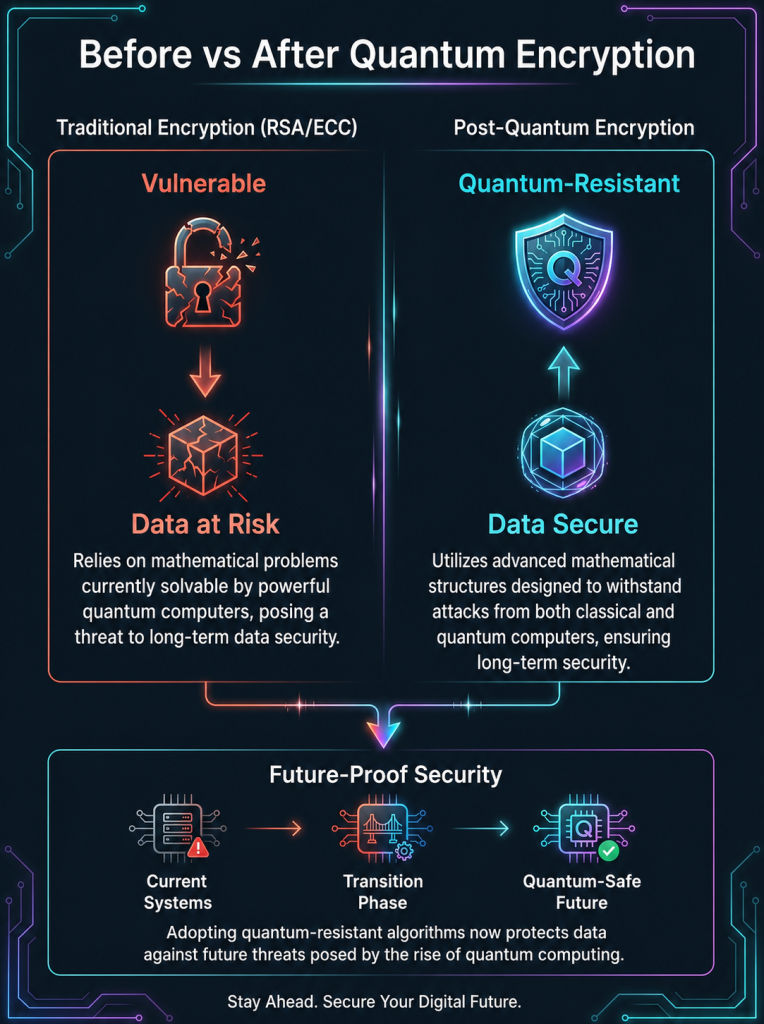
The encryption we use today, like RSA and ECC, relies on complex math problems, and quantum computers, with programs like Shor’s algorithm, would be brilliantly adept at solving those problems.
Quantum-resistant encryption is different in how it’s built mathematically, using ideas from things like lattices, hashing, and codes. Experts think these are safe from quantum computer attacks because, as of now, there’s no speedy quantum trick for breaking them.
But we’re not going to swap all our encryption all at once. It’s more of a slow move toward encryption that can survive the quantum age, working alongside what we have now, but getting us ready for the dangers of the future.
What NIST’s New Standards Include
After years of research and testing, NIST (the National Institute of Standards and Technology) has now officially approved a set of new encryption methods that are able to withstand attacks from a quantum computer. These handle the two important parts of keeping things safe in today’s digital world: swapping secret keys and creating digital signatures.
For safely exchanging encryption keys, organisations will be using something called ‘key encapsulation mechanisms‘, and in this case, that’s CRYSTALS-KYBER.
To ensure that something is who it claims to be and has not been altered (digital signatures), you will find that CRYSTALS-DILITHIUM, FALCON, and SPHINCS+ cover this.
Classic McEliece is also still looking viable for specific jobs; it’s been studied for ages and is incredibly robust.
These particular standards were selected after rigorous testing for security, speed, and ease of implementation. Because of them, organisations needing encryption that will hold up against quantum computers now have a straightforward way to get it.
Why This Matters for Businesses
These new standards aren’t just about the techy details; they’ll really affect how business is done.
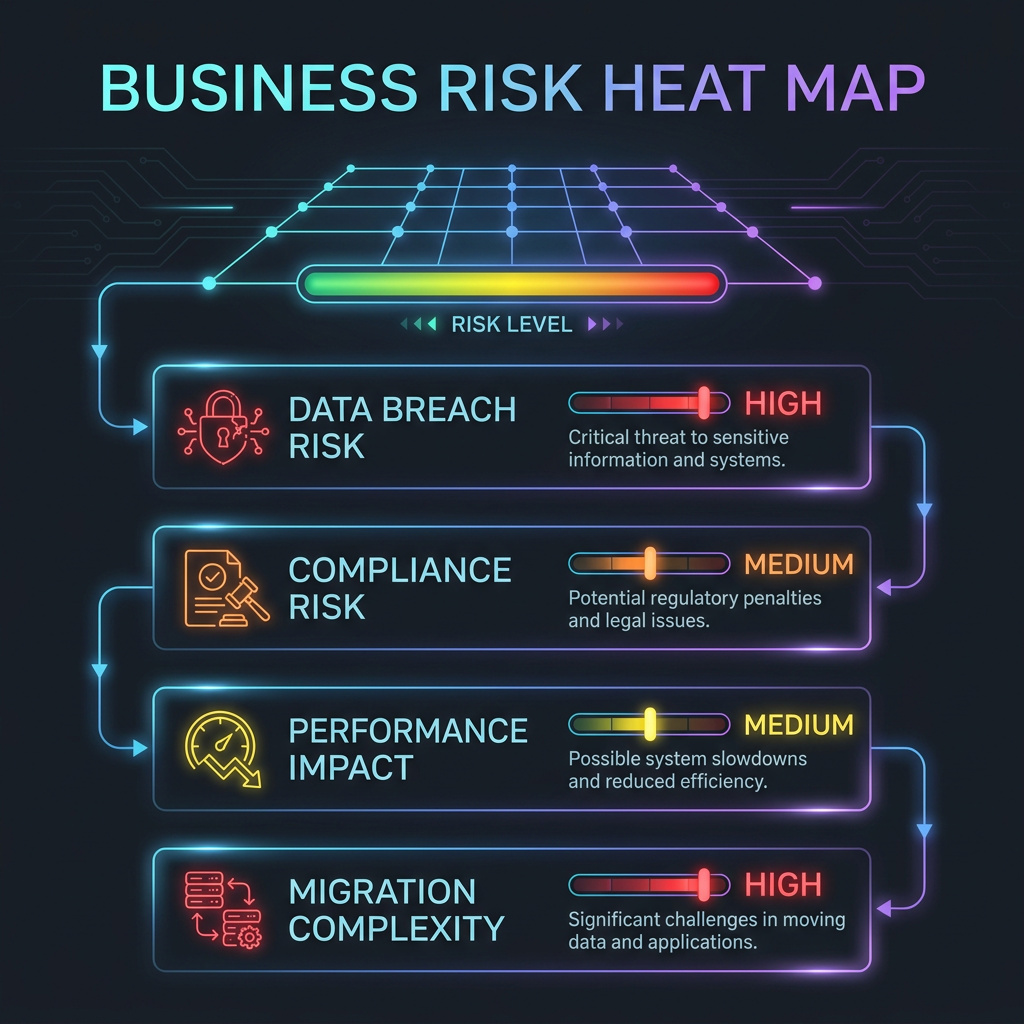
1. Data Longevity Risk
Information businesses protect with encryption now might need to stay protected for a long time, even for many years or decades. And someone with bad intentions is quite possibly grabbing that encrypted information right now to hold onto it. They’re waiting for the day when quantum computers are powerful enough to break the encryption, a tactic called “harvest now, decrypt later.”
2. Regulatory Pressure
The governments and regulatory bodies that enforce the rules are increasingly concerned with being prepared for quantum computing. Financial institutions, healthcare providers, and those running vital infrastructure will almost certainly be told to use encryption methods that quantum computers can’t crack.
3. Brand Trust and Reputation
If old, vulnerable encryption leads to a data leak, people will lose faith in your business. But companies that move to quantum-resistant encryption quickly show they’re forward-thinking and are really looking after security.
The Role of Application Layer Encryption
Protecting the very foundation of a system with encryption is good, but encrypting information at the application level, where it’s actually handled and exists, is absolutely essential for keeping confidential stuff safe.
Application-level encryption scrambles your data before it’s sent over any network, or filed away in a database. And pairing this with encryption that’s safe against quantum computers builds a really robust security wall against dangers we have now, and ones that are coming.
For example:
- Customer data in web applications
- Financial transactions in fintech platforms
- Sensitive communications in enterprise tools
By building encryption that can withstand quantum computing attacks directly into applications, companies can cut down on how vulnerable they are to these new and developing dangers.
Transitioning to Quantum-Resistant Encryption
Moving to post-quantum encryption requires a structured approach. It is not a simple plug-and-play upgrade.
- Cryptographic Inventory: Identify where and how encryption is used across systems, applications, and data flows.
- Risk Assessment: Determine which assets are most vulnerable to quantum threats based on data sensitivity and lifespan.
- Hybrid Cryptography: Many organizations will adopt hybrid models that combine classical and quantum-resistant algorithms during the transition phase.
- Vendor Evaluation: Work with quantum encryption companies that offer proven implementations aligned with NIST standards.
- Continuous Monitoring: As standards evolve, organizations must remain adaptable and update their cryptographic strategies accordingly.
Challenges Businesses Should Expect
Even though it’s incredibly important, switching to cryptography that can’t be broken by quantum computers is going to be genuinely tricky for businesses, both in how they run and in their long-term plans. Really getting to grips with exactly what those difficulties are will allow companies to change over to the new systems with a lot less fuss, and steer clear of expensive errors.
- Performance Considerations
Quantum-resistant algorithms, the kind that’ll hold up against future super-powerful computers, generally need much bigger “keys” and a lot more computer processing than what we use for security today. That extra work can slow things down, and for busy systems like those handling banking or online software, that delay is noticeable.
- Integration Complexity
Getting post-quantum encryption working with what you already have is usually tricky. A lot of older systems just aren’t built to handle these brand new ways of doing cryptography. That might mean completely rethinking how applications interact with each other (their APIs), changing the rules for how things talk to each other (communication protocols), and even altering the core of your systems.
- Skills Gap
The world of “after quantum” cryptography is a pretty niche area, and it’s one where there just aren’t many people with the necessary skills right now. The vast majority of cybersecurity folks know how to use older, ‘normal’ encryption methods. Therefore, companies are going to have to spend money on teaching their current employees or getting them further training to catch up. It can be both expensive and hard to find people who are already experts, and even if you have people internally, they’ll need time to really get to grips with how this new stuff works.
- Evolving Standards
The NIST has given its first guidelines for post-quantum cryptography, but this whole area is still developing. New breakthroughs could easily change which mathematical formulas (algorithms) we use, and we’ll almost certainly get more standards in the future. Because of that, companies should aim for adaptability. The best thing they can do is to design their security systems to be easily updated, so they can swiftly respond to alterations and continue to meet the rules of their industry and the law.
How QEncrypt Supports the Transition
Choosing the right solution is super important for companies as everything changes. QEncrypt deals with encrypting things to be safe from quantum computers in a full, all-in-one way and puts in the encryption types that the NIST has approved that can grow with you and actually work in the real world.
QEncrypt relies on some quantum-proof and complicated encryption tech: CRYSTALS-KYBER for keeping keys safe, CLASSIC MCELIECE for key protection, and CRYSTALS-DILITHIUM, FALCON, and SPHINCS+ for digital signatures (basically a super secure form of ID). When QEncrypt links these algorithms that can withstand quantum attacks with already robust encryption in your apps and encryption at the app level, businesses can protect their information from dangers today, and from those that will be coming along later.
Conclusion
Cybersecurity has reached a critical turning point now that NIST has published its standards for post-quantum security. It means organizations have to completely change how they’ll safeguard their confidential data, because technology is getting more powerful. Using encryption that will work after the arrival of quantum computers isn’t something you’d like to do; it’s essential for keeping things safe and continuing to bounce back from trouble in the future.
QEncrypt is here to help with this entire shift, offering successful methods and expert knowledge to secure businesses against quantum attacks in the future.
Want to secure your business confidential records?