
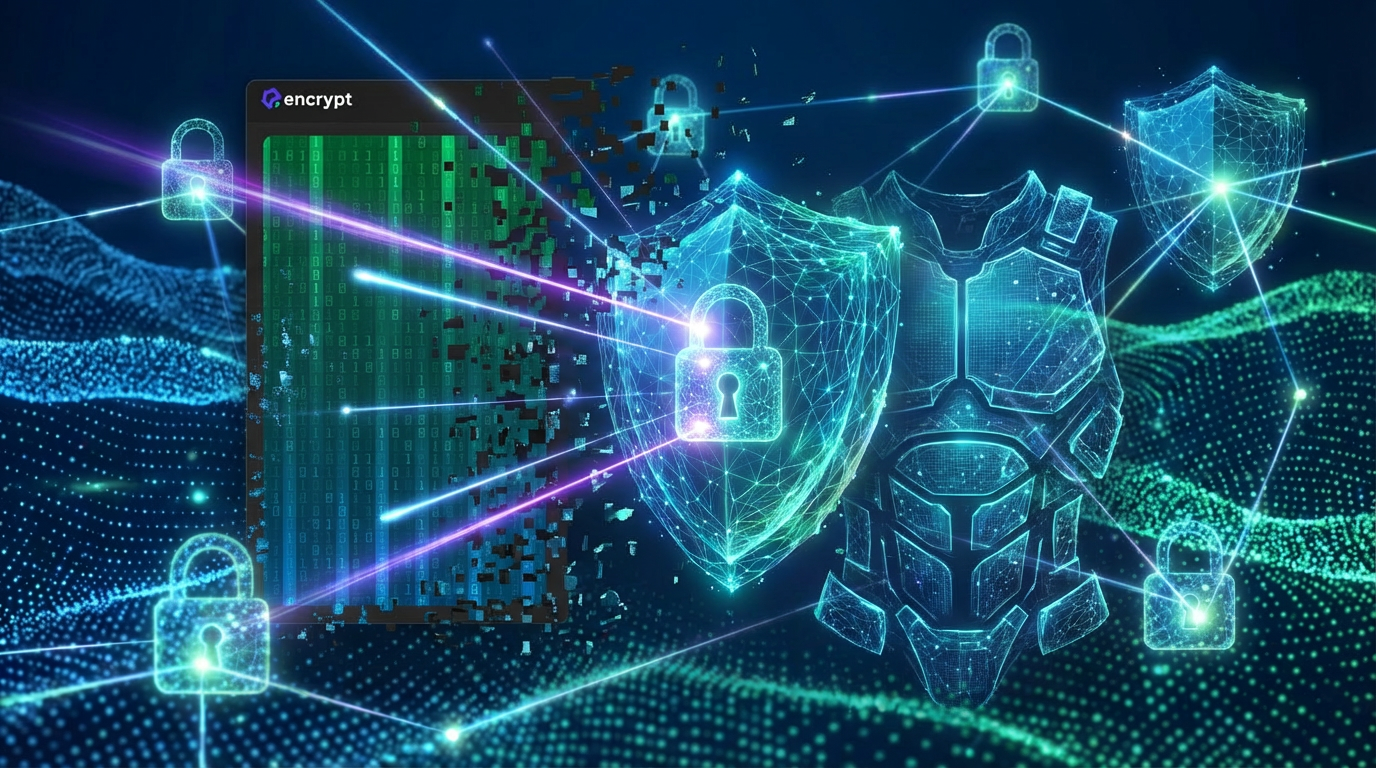
Regarding encryption, many people assume that once a file is encrypted, it’s permanently secure, but encryption has a lifespan. As computing power evolves, especially with the rapid progress toward quantum computing, the protection methods organisations rely on today are slowly becoming obsolete.
This is no longer a theoretical concern. According to industry forecasts, the global post-quantum cryptography (PQC) market is projected to reach $1.5+ billion by 2026, growing at an extraordinary ~49% CAGR through 2034. Governments, enterprises, and security leaders are already preparing for a future where traditional encryption can no longer guarantee safety.
The real challenge lies in the gap between how long data needs to remain secure and how long current encryption can protect it. This is where quantum-safe encryption steps in, bringing a long-term, future-proof approach to cybersecurity.
The Hidden Problem with Modern Encryption
The problem isn’t a lack of encryption; it’s misplaced confidence in its longevity. Most current systems are built to defend against today’s threats, not tomorrow’s. Quantum-safe encryption flips this mindset. Instead of reacting to threats as they appear, it ensures that data remains protected throughout its entire lifecycle. Solutions like QEncrypt are designed with this long-term vision in mind, helping organizations secure sensitive information without constantly rebuilding their security stack.
Data That Outlives Its Encryption
Data today doesn’t disappear; it accumulates. Financial records, legal contracts, intellectual property, healthcare data, and private communications often need protection for 10, 20, or even 50+ years. Yet most encryption standards were never designed for that kind of longevity. A recent cybersecurity insight suggests that over 60% of enterprise data has long-term sensitivity, meaning its value extends far beyond the lifespan of current encryption methods.
Quantum-safe encryption strategies overcome this gap, ensuring that data remains secure even as computational capabilities evolve. It’s not just about protecting data now; it’s about protecting it in the future too.
“Harvest Now, Decrypt Later” Is Already Happening
One of the most urgent threats today is the “Harvest Now, Decrypt Later” (HNDL) strategy. Attackers are already collecting encrypted data with the expectation that future quantum computers will be able to break it. This means your data could be stolen today and exposed years later.
- Intelligence agencies and cybercriminal groups are actively storing encrypted datasets
- Long-term sensitive industries (finance, defence, healthcare) are primary targets
- Even encrypted backups and archives are at risk
Quantum-safe encryption directly counters this threat by using algorithms designed to resist both classical and quantum attacks, ensuring that stolen data remains useless.
Traditional Encryption Wasn’t Built for Quantum Reality
For decades, encryption standards like RSA, AES, and ECC have been the core of digital security. But these systems rely on mathematical problems that quantum computers are expected to solve exponentially faster. Experts estimate that a sufficiently powerful quantum computer could break widely used encryption methods in hours, or even minutes, compared to the thousands of years required today. However, this doesn’t mean current encryption is “broken,” it means it’s time-limited. Quantum-safe encryption represents the next evolution: algorithms specifically designed to withstand quantum-level attacks, ensuring long-term resilience.
Security Tools Are Too Complex to Use Consistently
Another major issue in today’s cybersecurity isn’t just technology, it’s usability. Studies show that human error accounts for over 80% to 95% of security breaches, often due to misconfigured or overly complex systems.
When encryption tools are difficult to deploy or manage:
- Teams avoid using them consistently
- Mistakes increase vulnerability
- Security becomes fragmented
Modern quantum-safe solutions are addressing this by prioritizing simplicity, automation, and seamless integration. Tools like QEncrypt focus on usability, ensuring strong encryption doesn’t come at the cost of practicality.
Future-proofing Feels Expensive: But Waiting Costs More
Due to concerns related to costs and disruption, many organizations are delaying adopting new encryption standards. But this delay is causing a bigger threat for them.
According to multiple cybersecurity reports:
- The average cost of a data breach exceeded $4.5 million globally
- Long-term breaches involving sensitive data can cost significantly more due to regulatory penalties and reputational damage
However, Quantum-safe encryption solutions are now in the research and development phase to allow organizations to integrate them into existing systems rather than replace them entirely.
Starting early allows organizations to:
- Spread costs over time
- Avoid emergency migrations
- Reduce long-term risk exposure
How Quantum Safe Encryption Solves These Challenges
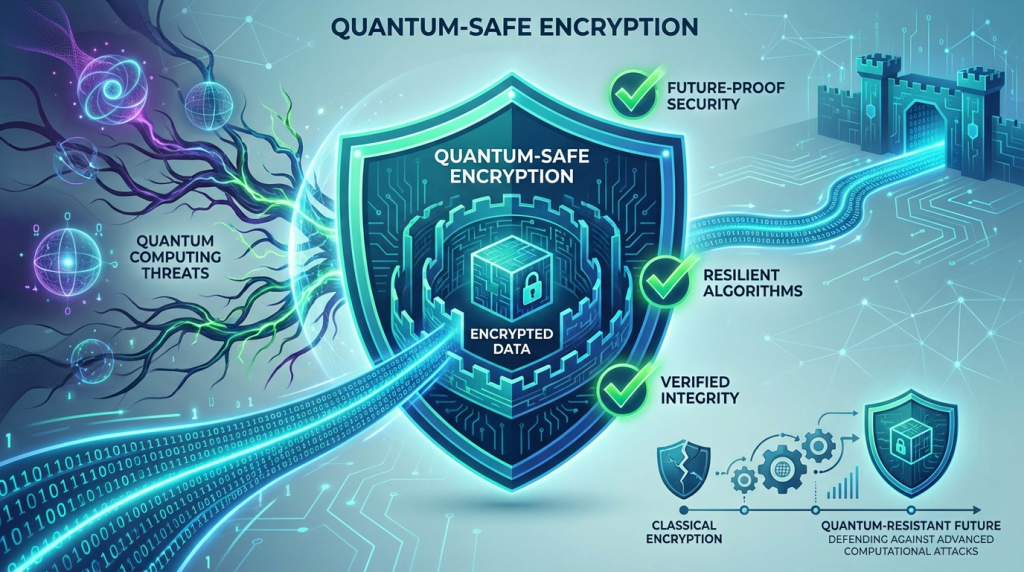
Traditional encryption struggles with three major problems, including:
- Limited lifespan
- Vulnerability to future decryption
- Complexity in real-world implementation
However, Quantum-safe encryption methods address all three by offering:
- Long-term data protection (future-proof algorithms)
- Resistance to quantum and classical attacks
- Seamless integration into existing systems
This marks a shift from reactive security to proactive, lifecycle-based protection. tive to a proactive mindset allows you to safeguard both the data you already have and the risks that will come in the future.
How QEncrypt Makes Quantum-Proof Encryption Practical
QEncrypt bridges the gap between advanced cryptography and everyday usability. Instead of requiring deep technical expertise, it provides a simple and accessible way to secure files using quantum-resistant methods. Built with real-world adoption in mind, it focuses on:
- Ease of use for individuals and businesses
- Compatibility with existing workflows
- Long-term data security without complexity
This approach makes quantum-safe encryption not just theoretical, but practical and deployable today.
Who Should Adopt Quantum-Safe Encryption Now?
Quantum-safe encryption is no longer limited to governments or large enterprises. It’s becoming essential for:
- Businesses handling confidential or proprietary data
- Professionals managing client information
- Organizations with long-term data retention requirements
- Privacy-conscious individuals
Early adopters gain a significant advantage by avoiding rushed transitions and costly upgrades later.
Why Acting Early Matters More Than Waiting
Cybersecurity experts widely agree that waiting for quantum computing to fully arrive is a risky strategy. By the time quantum threats become mainstream, organizations’ sensitive data may already be compromised, migration costs will spike due to urgency, and attackers will have years of harvested data ready to decrypt. Thus, there is no downside to preparing early, but there is significant risk in delaying.
More Value, and Less Complexity: QEncrypt in the MindSuite Bundle
From a cost perspective, adopting quantum-safe encryption is becoming more accessible.
- Individual Tools: $205.95/year or $617.85 over 3 years
- MindSuite Bundle: $174.99/year or $448.99 over 3 years
This not only reduces costs but also simplifies security by combining multiple tools into a unified solution, making long-term protection easier to manage and scale.
Final Thoughts
Encryption is no longer just about protecting data today; it’s about ensuring that protection lasts for decades. As cyber threats evolve and quantum computing moves closer to reality, traditional encryption alone is no longer enough. Quantum-safe encryption, also known as post-quantum encryption, addresses the fundamental challenges of longevity, usability, and future risk. Solutions like QEncrypt are making this transition practical, allowing individuals and organizations to secure their data not just for the present, but for the future.
The shift has already begun. The only question is whether you move early or react later.